


There’s a black overshirt I wear constantly. Boxy, strong-shouldered, a little severe. Every time I put it on, someone asks where it’s from.
It’s secondhand. And the shoulders, the part they’re actually responding to, I added myself. A pair of shoulder pads, sewn into a plain overshirt.
So there’s no link. There was never going to be one.
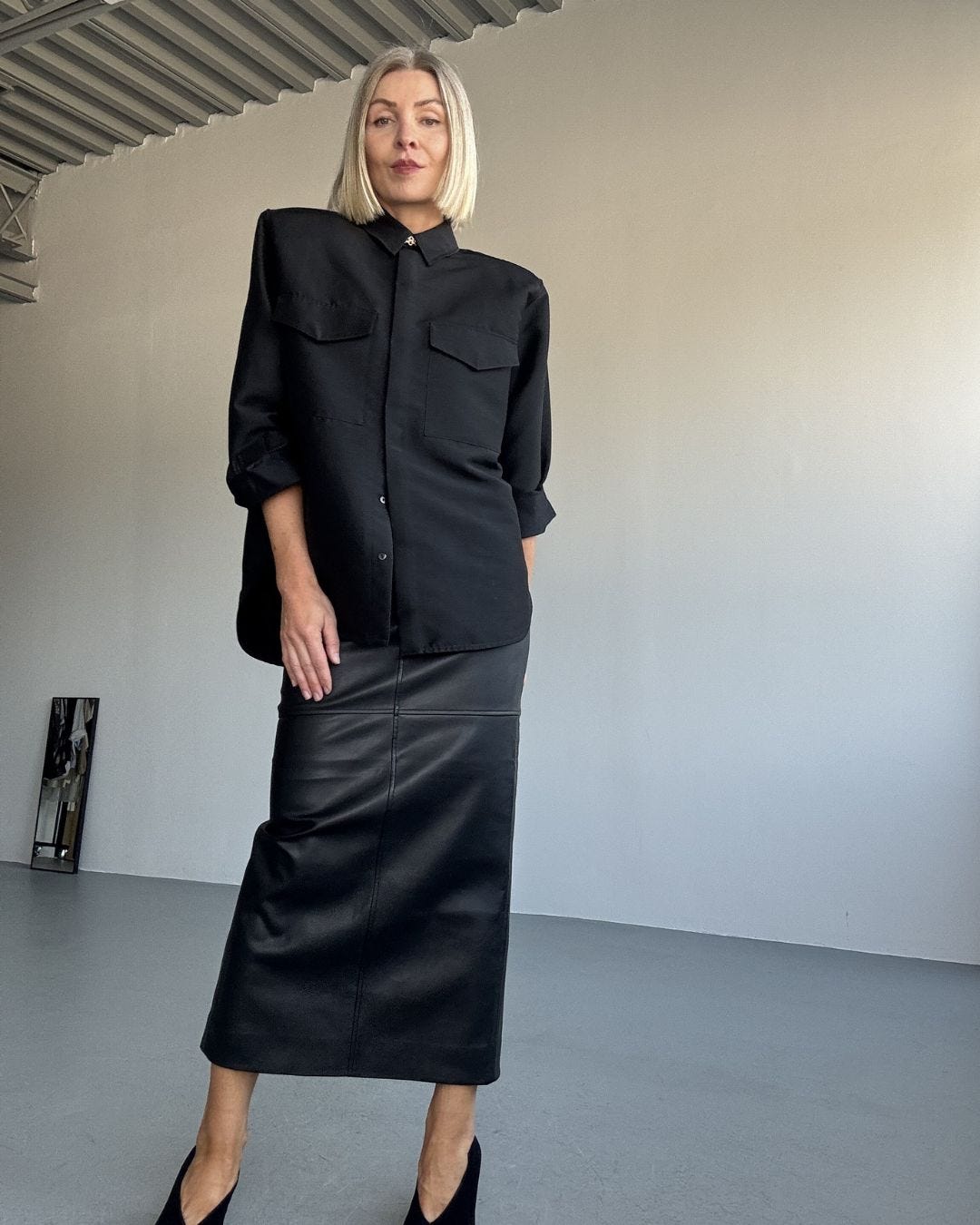
That overshirt is just the extreme version of something that happens every week. I post an outfit, and within the hour the messages come. Where’s the top from. Who makes the trousers. Drop the link. It’s the question I get more than any other, and I almost always answer it.
Asking is a fair thing to do
I want to say this plainly, because the rest of this only works if I do. Asking for the link is completely reasonable.
A good link saves you an hour of scrolling and a real amount of decision fatigue. You saw something that worked, and you’d rather not spend your evening reverse-engineering it. Handing that decision to an eye you trust isn’t lazy. It’s efficient.
And I share links. They’re part of how this work gets made, and I’m not going to pretend otherwise. If I can point you straight to the trouser, I will. A lot of what I wear is vintage or secondhand, so often there’s nothing to link at all. When that happens, I try to find you the nearest thing.
But most of the time, the link wasn’t the thing you actually needed.
The link only gets you the piece
Here is the gap nobody mentions.
The link solves the item. It does not solve the outfit.
You can buy the exact trousers I wore, hang them in your closet, and still not have the thing you liked in the photo. Because the thing you liked was rarely the trousers on their own. It was the trousers with that shirt, at that length, against that shoe. It was the proportion. The one note that didn’t quite match. The way the whole thing sat together.
The piece is the easy part. It has a name, a price, a link. The rest of it, the part doing the actual work, doesn’t come in the bag.
What you’re actually responding to
Take the oversized blazer I reach for most. Vintage, men’s, nothing you could look up.
But it isn’t that blazer doing the work. Any oversized blazer with a strong shoulder does the same thing. What you’re responding to is the proportion, the shoulder, the volume up top, and what it’s balanced against below. Get that balance right with a different blazer and it still works. Get it wrong, too much volume on the bottom, the proportions fighting each other, and even this one falls flat.
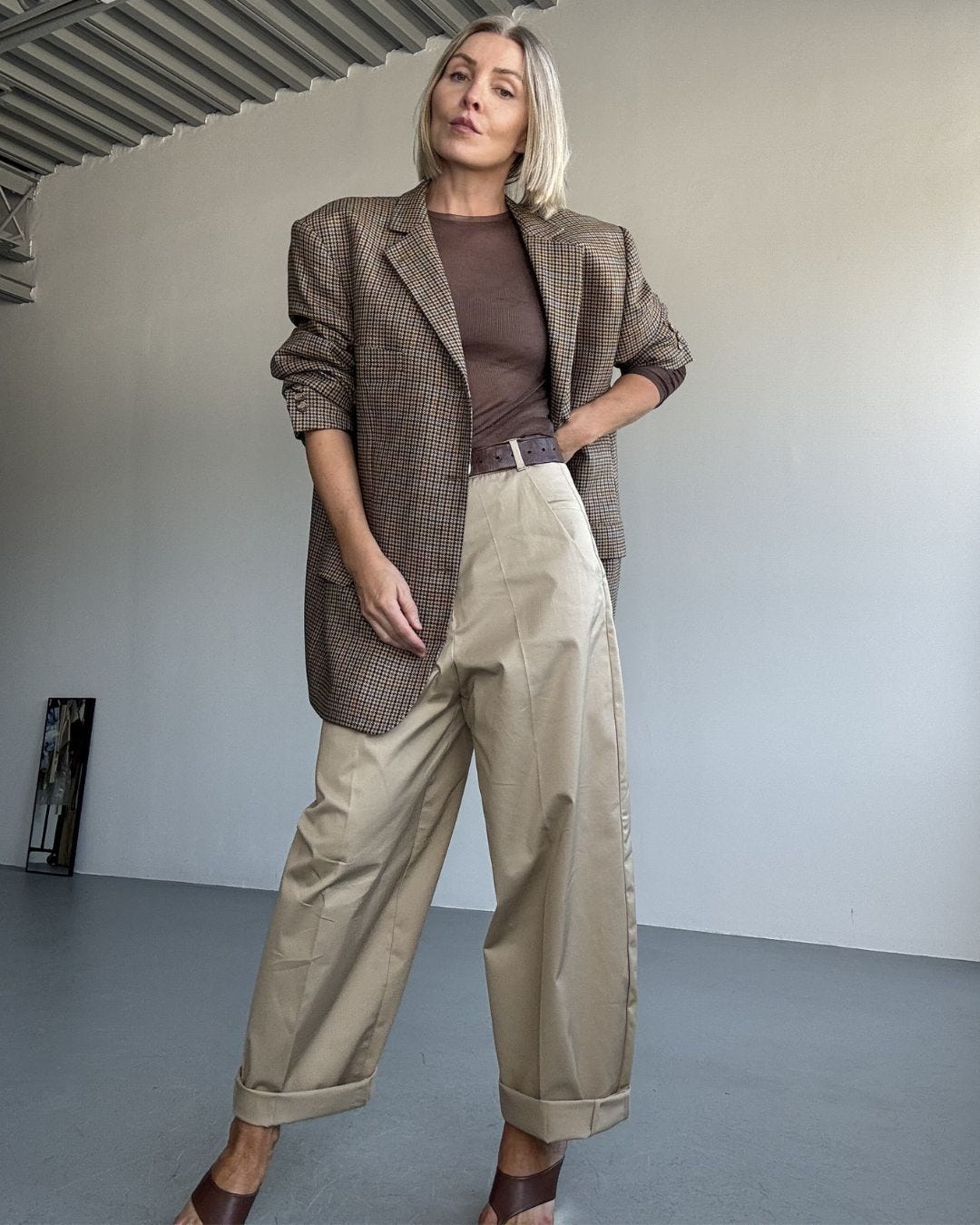
Sometimes a specific piece really is the magic. Fashion lives in the details, and now and then the exact thing is the exact thing. But even then, what you can carry home to your own closet is the logic, not the label.
Over time I noticed I kept building the same thing. A strong shoulder, one sharp piece against something soft, a few proportions I trust. I started calling it a Formula, mostly so I’d stop rethinking it every morning.
A Formula is just the logic underneath. The part that stays the same while the pieces change.
And it’s yours. Mine is built from thirty years and five cities, from a body and a climate and the things I already reach for. Yours won’t look like mine. Two women can buy the same coat, and only one of them feels like herself in it, and the difference was never the coat.
It’s the logic, not the label
So now, when an outfit stops me, I look at it differently before I start hunting.
Not where it’s from. What’s holding it up. The proportions, the one point of contrast, the thing being repeated. That’s the part that transfers, and most of the time I can build a version of it from what I already own.
It’s a slower way to look. It’s also the only one that lasts. A link gets you one outfit. Reading the logic gets you every outfit after it.
I’ll still tell you where it’s from. I always will. But the link gets you the piece, and the piece sells out.
The Formula doesn’t.
Greetings from London,
Yara
Love this. I completely agree. I think we're conditioned to look for shortcuts, but building personal style comes from understanding what actually works for you and your life. No one else's shopping list can replace that.
Spot on 🖤