


I recently pulled a wedding guest dress edit for a client, and it reminded me that this category is not hard, exactly. It’s just annoyingly specific.
A dress has to respect the setting, survive the heat, photograph well, and still feel like you. Easy, until you actually start looking.
For this edit, I looked across cocktail and more formal options because the setting matters, but so does the woman wearing the dress. A wedding in Valencia is not the same as a black-tie ballroom in London. You can bring more colour, more movement, more heat-friendly fabrics, but the dress still has to work for your body, your mood, and the room you’re walking into.
So here it is: summer wedding guest dresses I’d actually consider, from minimal shapes to stronger colour, plus the small details that make the whole thing work.
Consider the Location
A wedding guest dress starts with the location.
Not because every destination needs a cliché colour palette, but because the setting changes what feels right. A city hotel, a garden wedding, a beach ceremony, a countryside villa, and a destination wedding in Spain are all asking for slightly different clothes.
For a hot destination wedding, I’m thinking about movement, lighter fabrics, shoes that make sense on the ground, and a dress that still looks polished after hours of heat. For a city wedding, I might go sharper, darker, more structured. For a very formal evening wedding, length and fabric start to matter more.
Colour is part of it, but not the whole story. A dark brown polka-dot dress can make perfect sense in Valencia if the fabric moves, the shape feels right, and the styling doesn’t drag it into winter.
The real question is: does the dress belong in the setting, or are you forcing the setting to accept the dress?
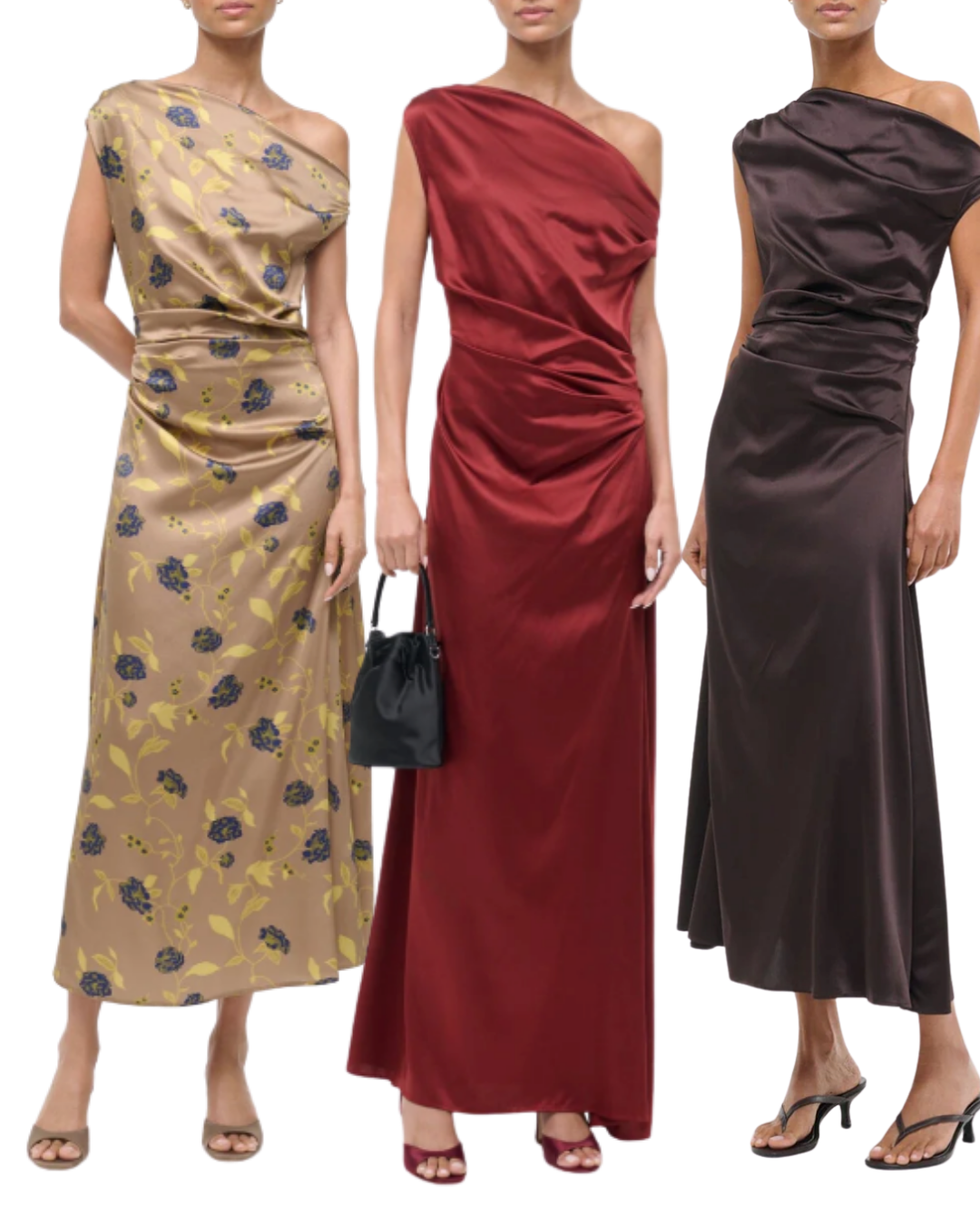
Start with the Silhouette
Before I look at colour, I look at shape.
What do you want the dress to do for you?
Legs? Go shorter, but keep the silhouette polished.
Height? A long column or tube shape can be beautiful.
Shoulders or décolleté? A strapless, halter, or open neckline keeps the focus there without needing much else.
Waist? Look for structure, ruching, or a good cut, not just a belt.
For curves, I usually look for a dress that works with the body, not against it: draping, ruching, a good waistline, or fabric that skims instead of clings. The goal is not to hide anything. It’s to choose the part of the body you want to lead with, then let the dress support that choice.
A good wedding guest dress should have a point of view, but it still has to serve you. Shape first, then colour, then styling.
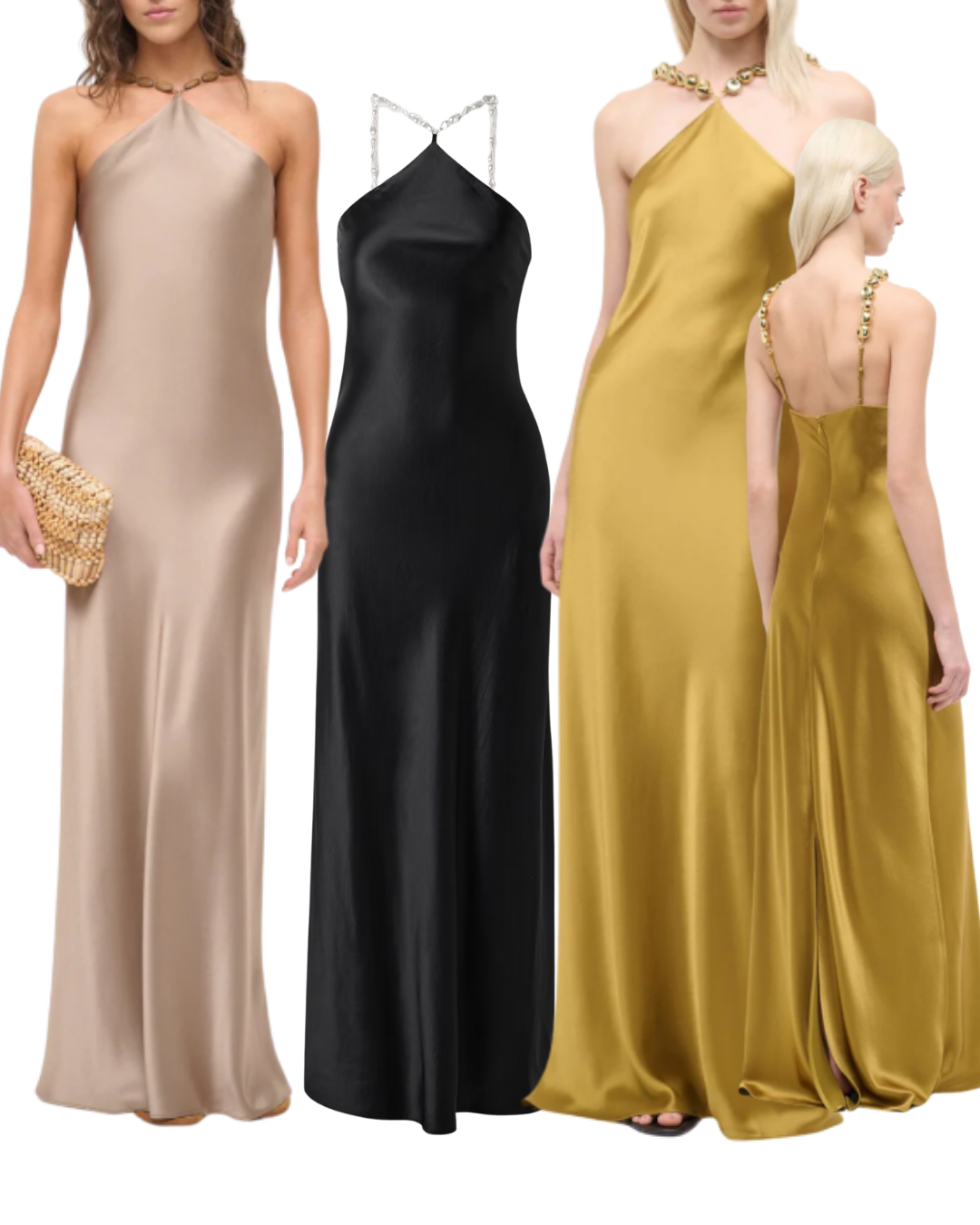
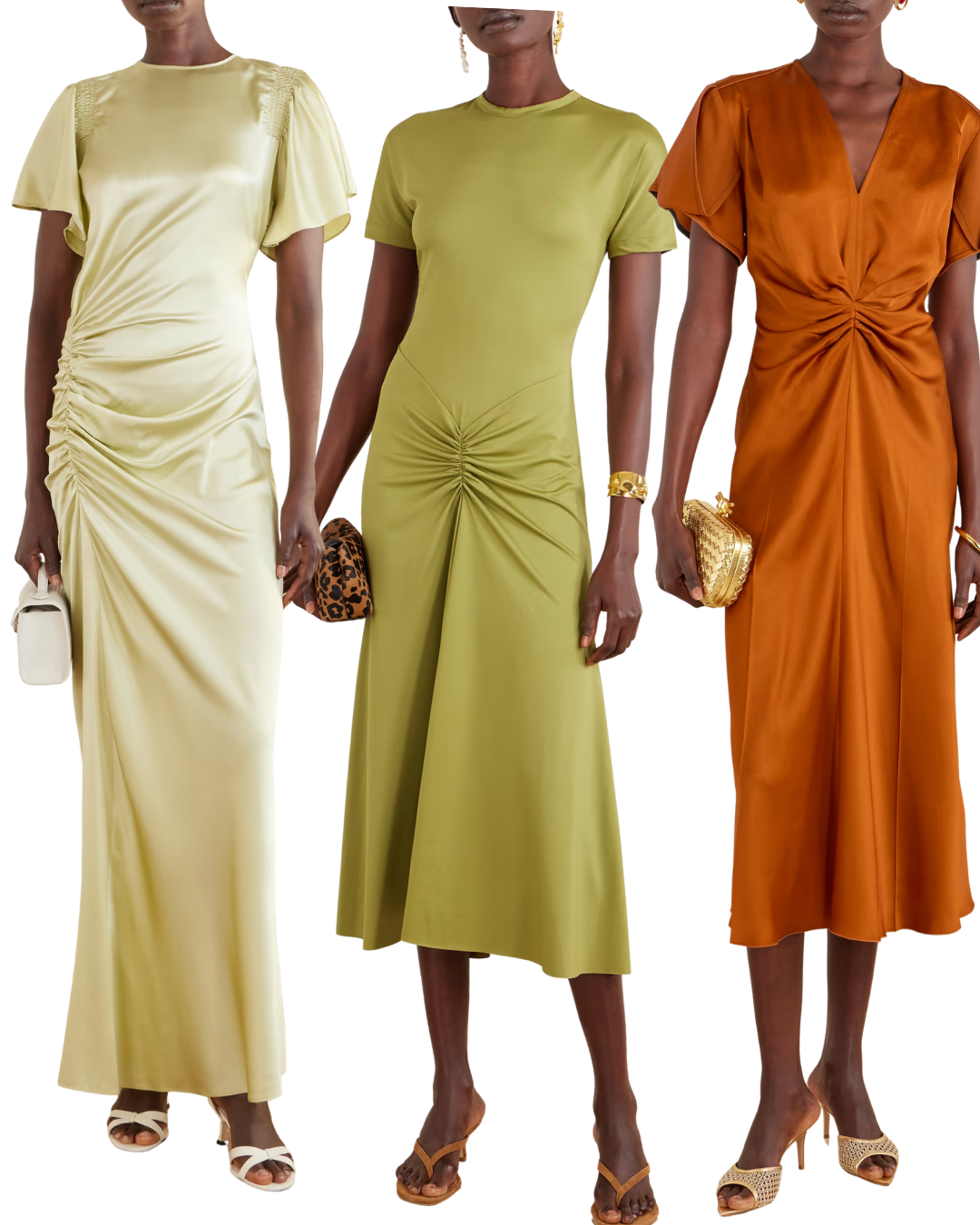
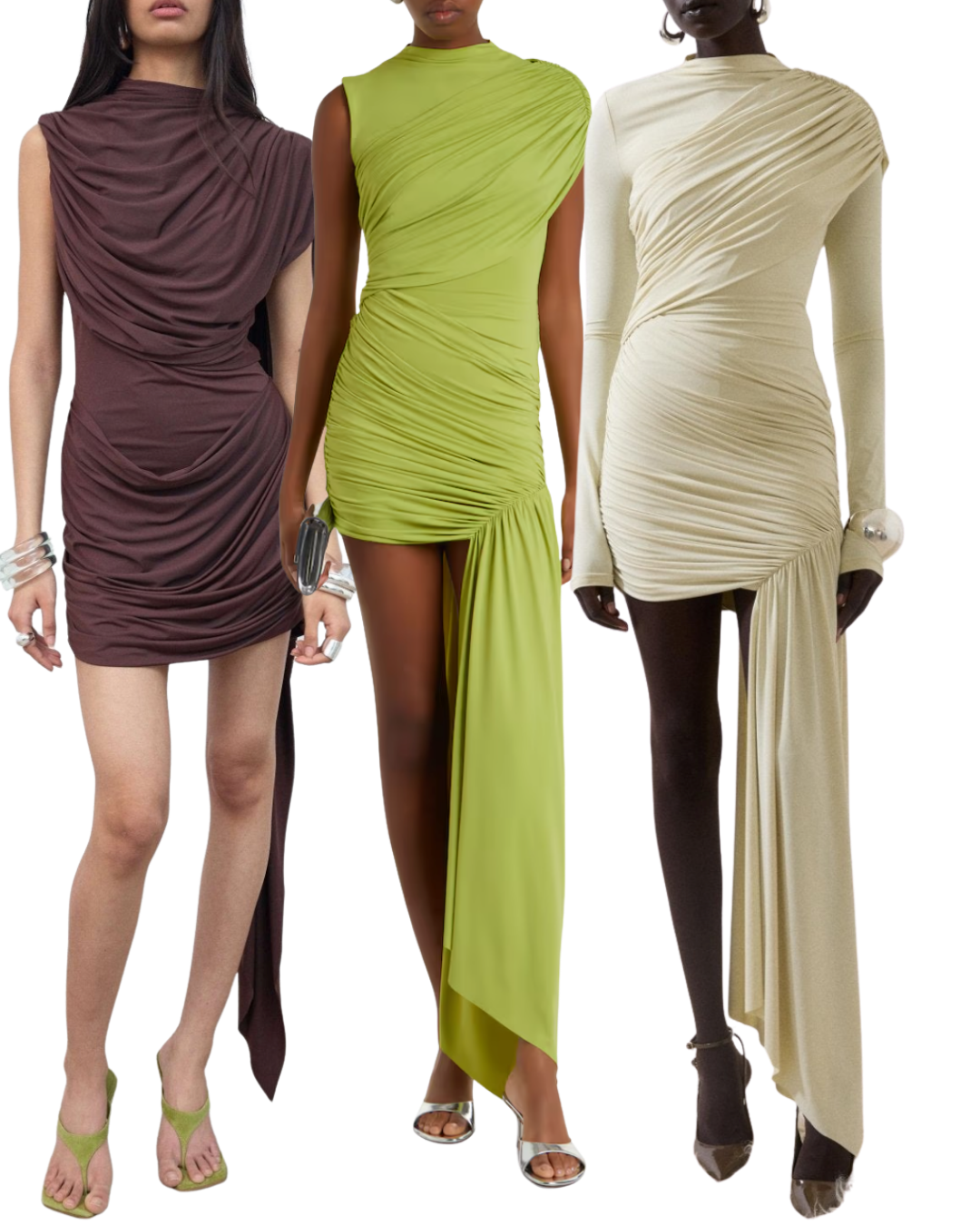
Don’t Be Shy with Colour
Colour is where wedding guest dressing gets a little delicate.
I don’t think the rule is “only wear brights” or “never wear black.” A dark dress can work beautifully in Spain, and black can be perfect in a city. It depends on the location, fabric, and mood of the wedding.
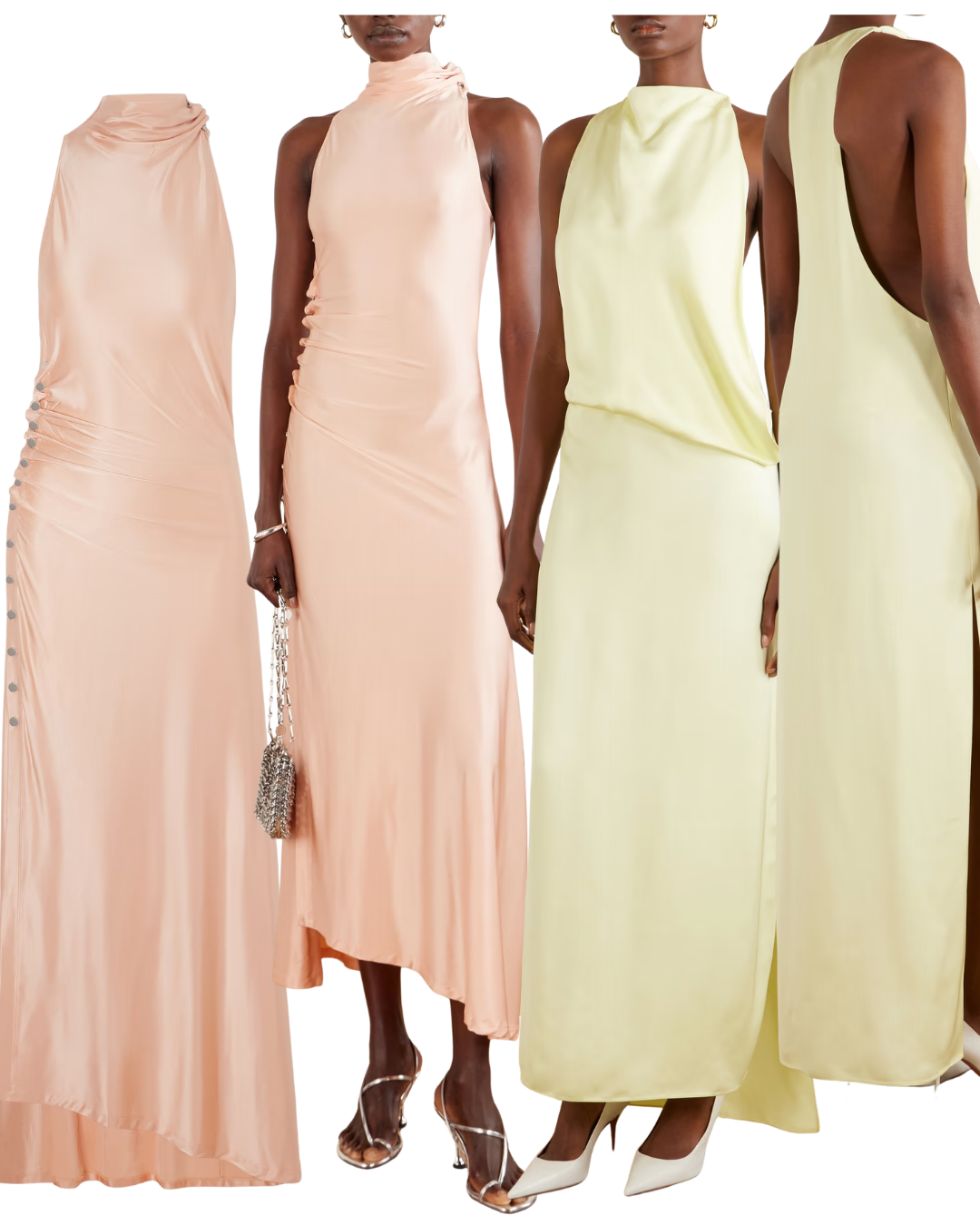
The one thing I’d be careful with is anything too pale: cream, champagne, ivory, very pale blush, icy silver, or light satin that photographs close to white. Sometimes the dress looks harmless on the hanger, but in daylight or flash it starts moving into bride territory.
If you want softness, print can help. A pastel floral or graphic print reads very differently from plain champagne or ivory.
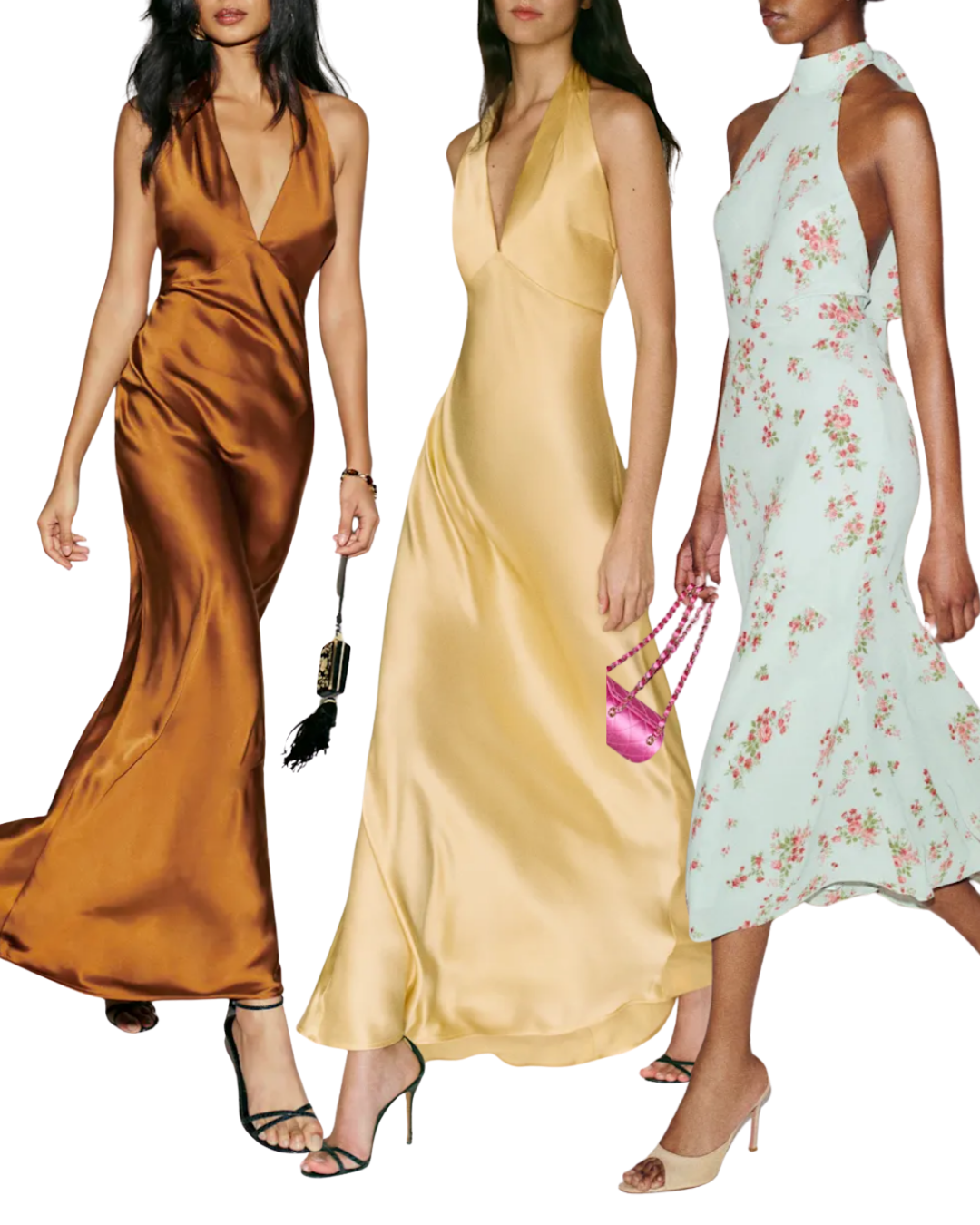
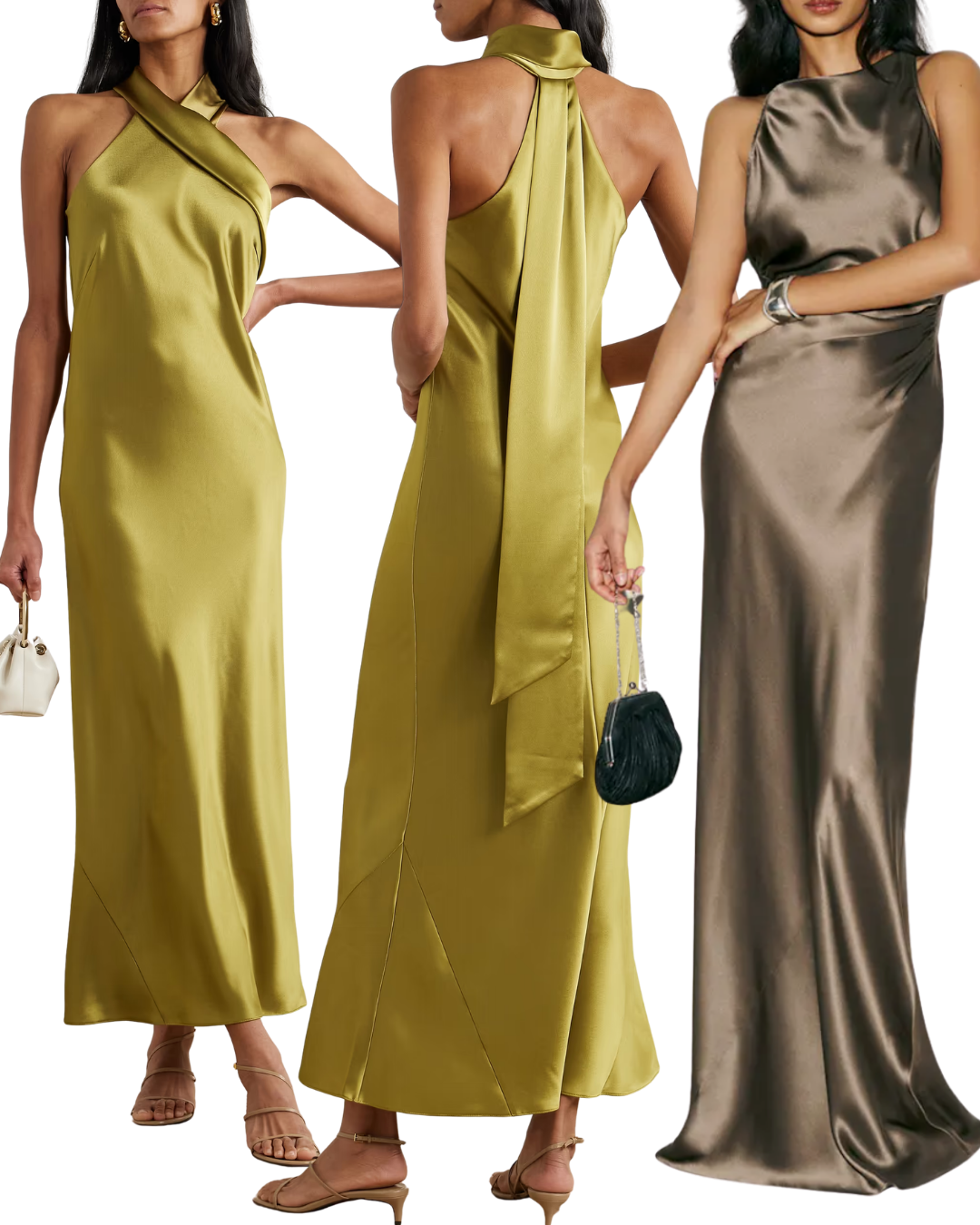
And honestly, don’t be afraid of colour. I don’t wear much of it day to day, but a summer wedding is one of the few places where colour makes complete sense. Butter yellow, dusty pink, coral, olive, chocolate, burgundy, navy, a print with depth, all good if the fabric and shape are right.
The goal is simple: the colour should clearly belong to a guest. Not the bride, not the bridal party, not a question mark.
Check the Fabric + Finish
Fabric is where a dress can look beautiful online and become complicated in real life.