


I’ve been quiet here for two weeks because I’ve been inside the Fall Stylebook.
Not in a dramatic way. More in the way where every outfit turns into a question: why does this work, what changed when I swapped the shoe, why does this coat fix the proportions, why does this same base keep showing up again?
This is my fourth Stylebook, and my second fall one. So by now, I can see the formulas repeating.
Not because I ran out of ideas. Because the strongest formulas are usually the ones that survive.
Straight jeans, button-down, tailored coat. Knit, trouser, good shoe. Blazer, denim, belt. Simple pieces, but only simple when the fit, cut, proportion, and silhouette are right.
The formulas are not meant to be revolutionary. The best ones are almost boring because they earn their place in real life.
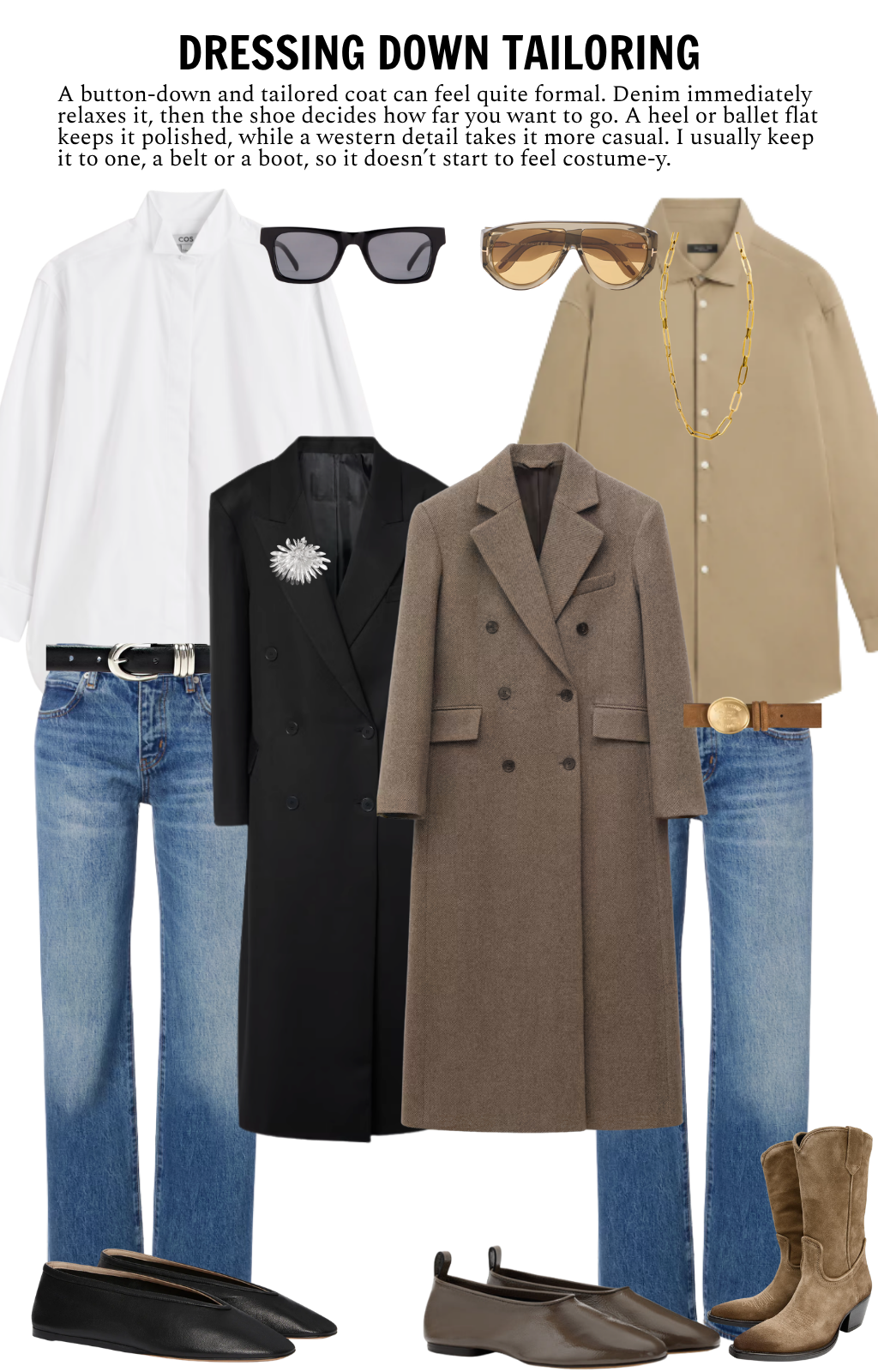
A button-down and jeans is not an idea. A button-down that sits right, denim with the right leg shape, a coat with enough structure, and a shoe that makes the whole thing current, that is the formula.
By the end, I had 37 formulas, and then some.
Which sounds very organized, but the process was not. The formulas did not arrive as rules. They worked more like evidence: what I actually wear, what I repeat, what I reach for when the weather gets colder, and what makes a piece feel current again.
That is the thing about a useful formula. It is discovered from a life, not prescribed to a wardrobe.
A formula can stay with you, but it does not have to stay the same.
A bad formula tells you what to wear.
A good one shows you what you already keep doing, then helps you do it better.
A formula is a combination that holds
A formula is not the same thing as a uniform, although a uniform can absolutely be a formula.
Karl Lagerfeld had a uniform. Carine Roitfeld has a uniform. Many stylish people do. Same shapes, same proportions, same mood, repeated until it becomes part of how you recognize them.
That is not a bad thing.
But a formula is a little looser. It is a combination that holds.
A certain jean shape with a certain top. A trouser volume with a particular shoe. A blazer that works because the layer underneath is lean. A coat that only makes sense when the hem is right.
It is not there to make you dress the same every day. It is there so you don’t have to start from nothing every day.
Once you know a combination works, you can repeat it, adjust it, make it warmer, make it sharper, make it more casual, make it more dressed. The formula gives you somewhere to begin.
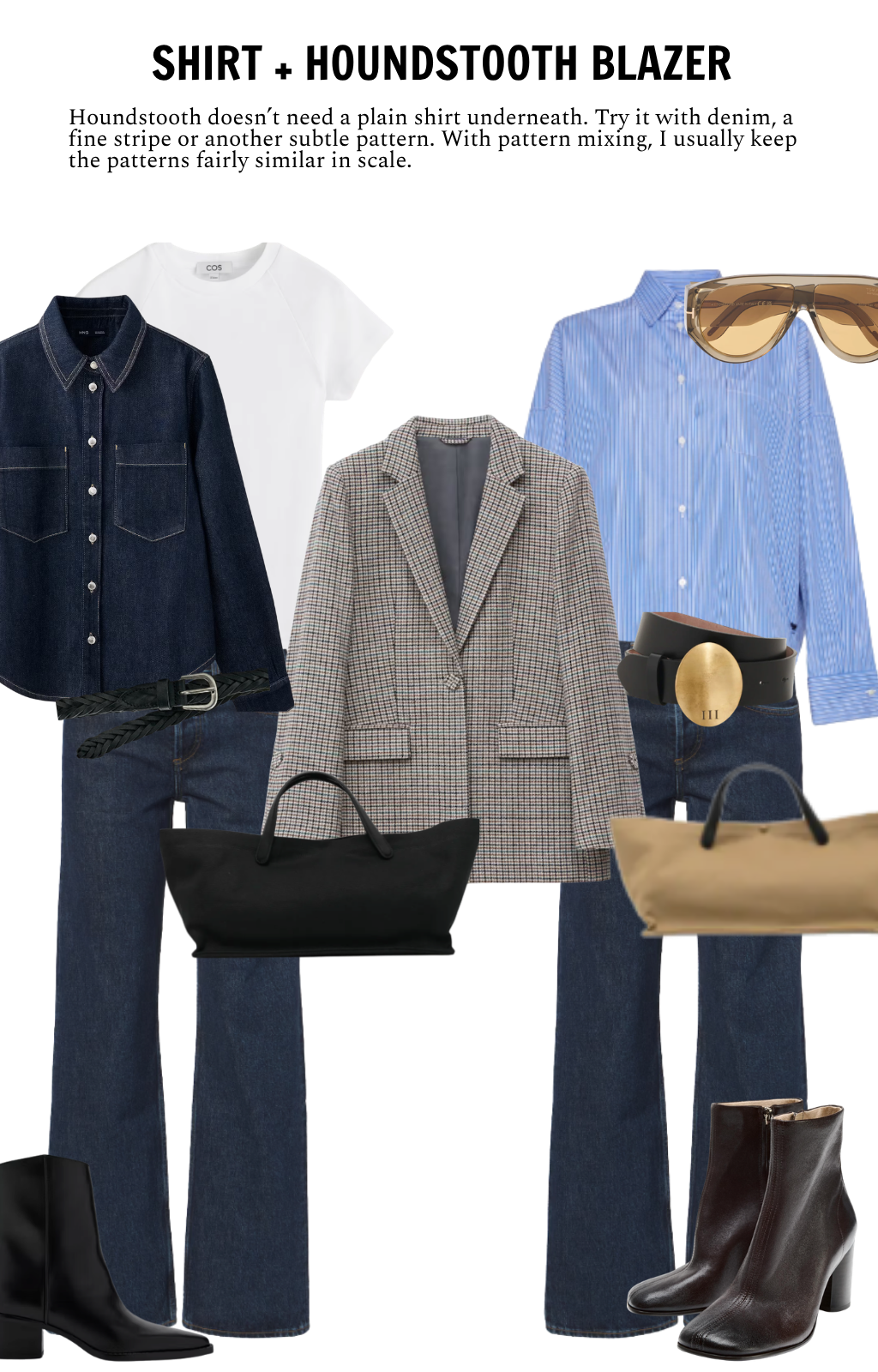
Pants decide more than we think
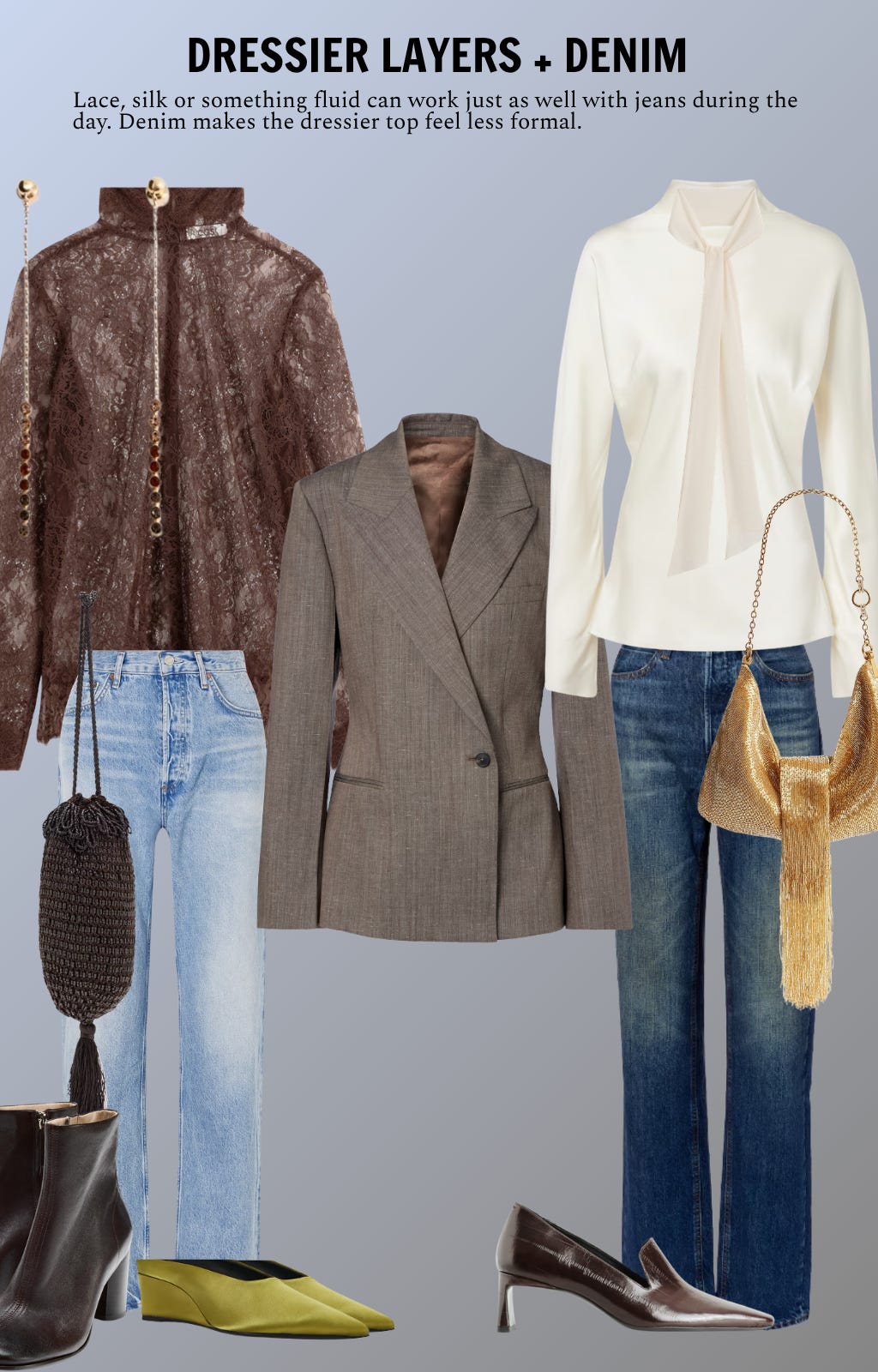
This time, I made the Fall Stylebook pants only, because when I think about real fall dressing, that is where most of us start.
Jeans, tailored pants, cargos, straight legs, wide legs. The pieces we build real days around.
And they decide more than we give them credit for: the top, the tuck, the shoe, the coat, the whole proportion, the mood.
Not because pants are more important than everything else, but because they set the architecture. Once the bottom half is working, the rest of the outfit has somewhere to go.
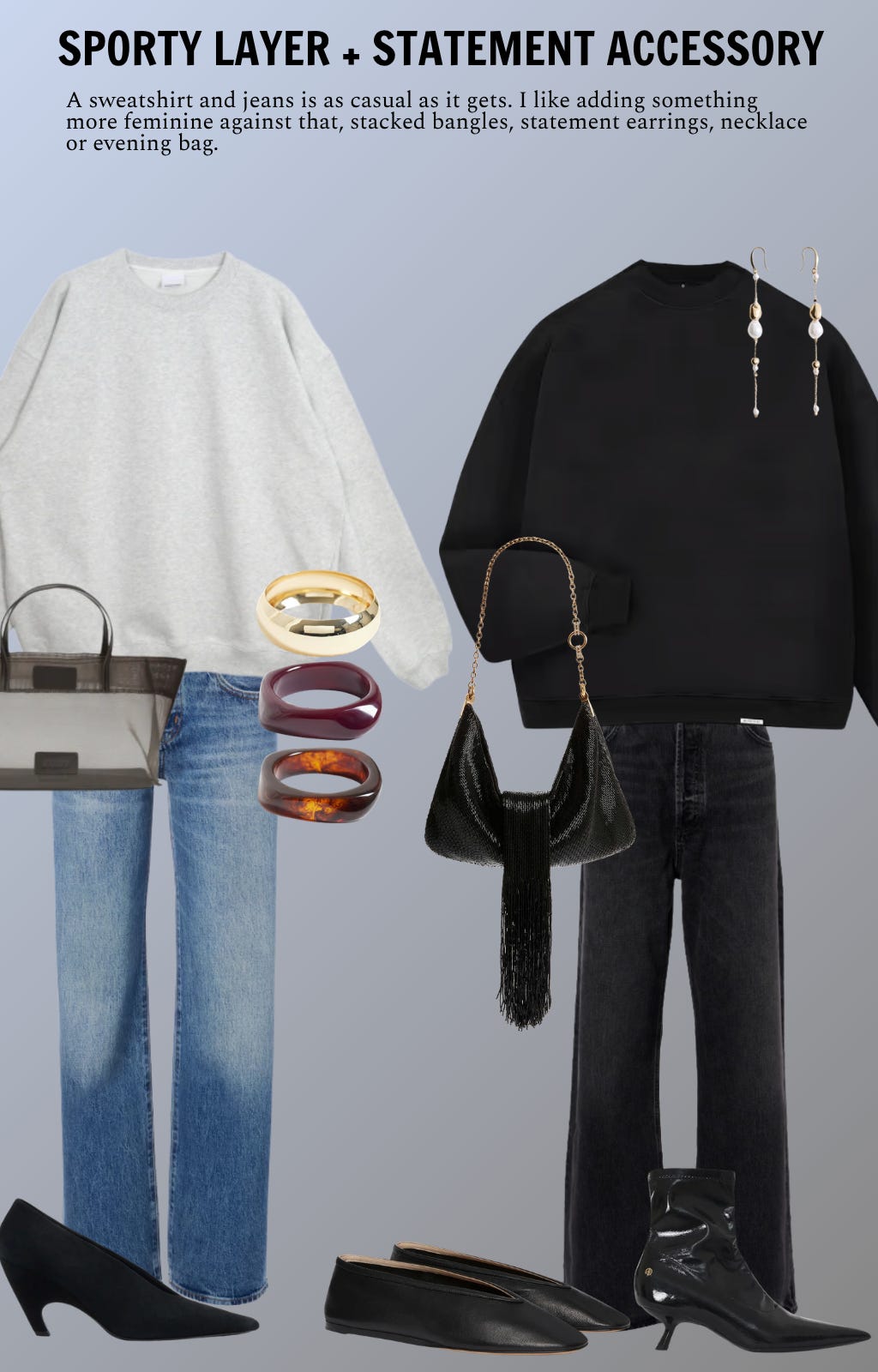
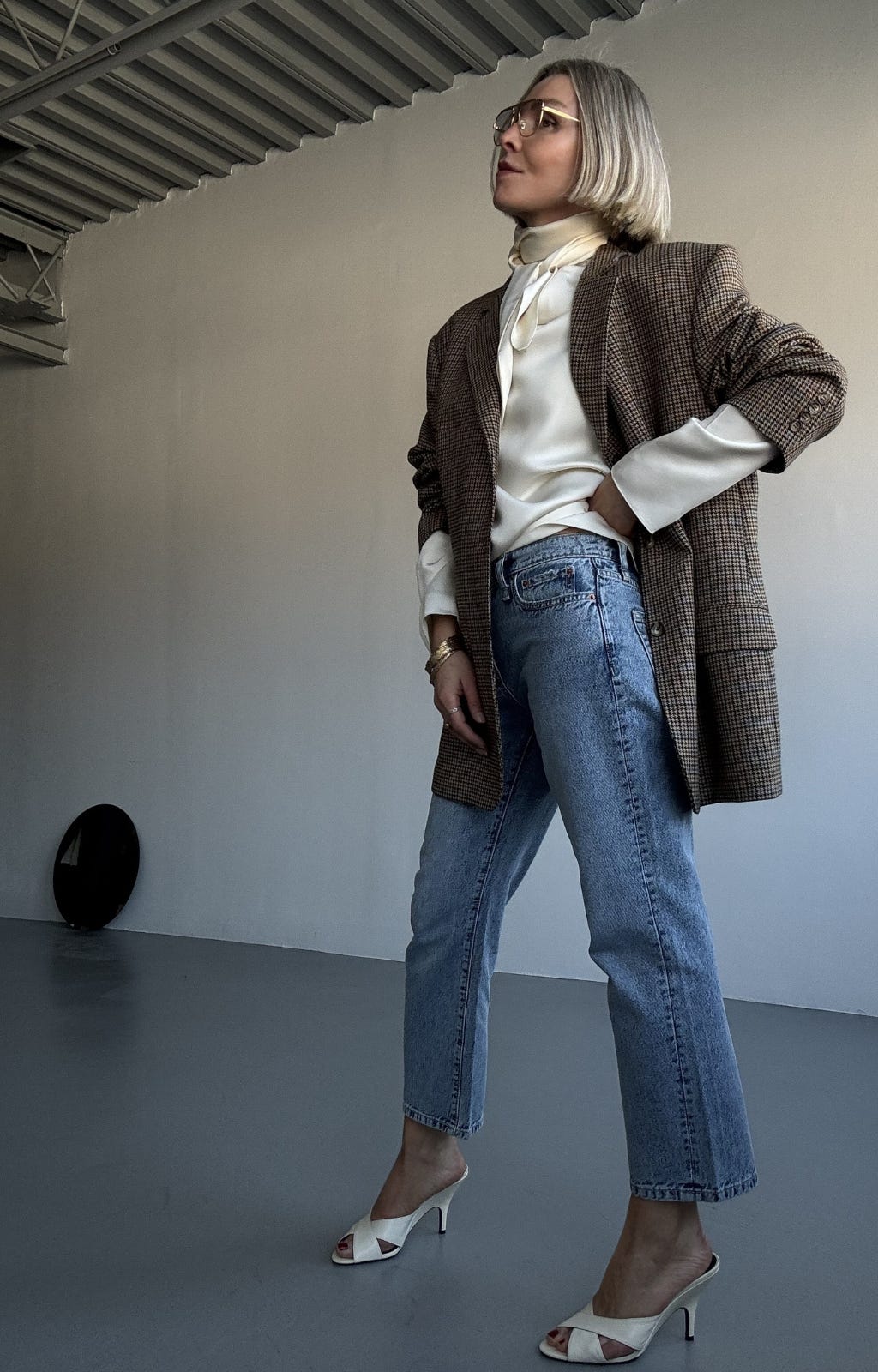
Where the pant meets the shoe
The shoe is usually where a formula succeeds or fails.
Not because there is one correct shoe, but because the hem needs something specific from it: weight, sharpness, height, space, or sometimes almost nothing.
A straight or bootcut jean is often easiest with a boot, western, pointed, ankle, anything that continues the line. A tapered “loafer jean,” the kind that hits just below the ankle, usually wants exactly that: a loafer, a sneaker, something that sits cleanly under the hem.
A slight flare usually asks for more elongation, especially if the fabric is heavy. That can be a heel, a platform, or a shoe with enough presence to keep the hem from dragging the whole look down.
A slouchy wide jean is different. The volume is all over, so the shoe has to work under the whole column, not just balance the hem. I look at where the denim breaks, how much shoe shows, and whether the bottom half feels intentional.
Arc-shaped or barrel jeans are the trickiest because the hem changes everything. I like them with a slouchy ankle boot when the pant tucks in cleanly, or with a very small pointed kitten heel. Flats can work too, but the length has to be right. The longer and heavier the hem, the more the shoe has to hold its own.
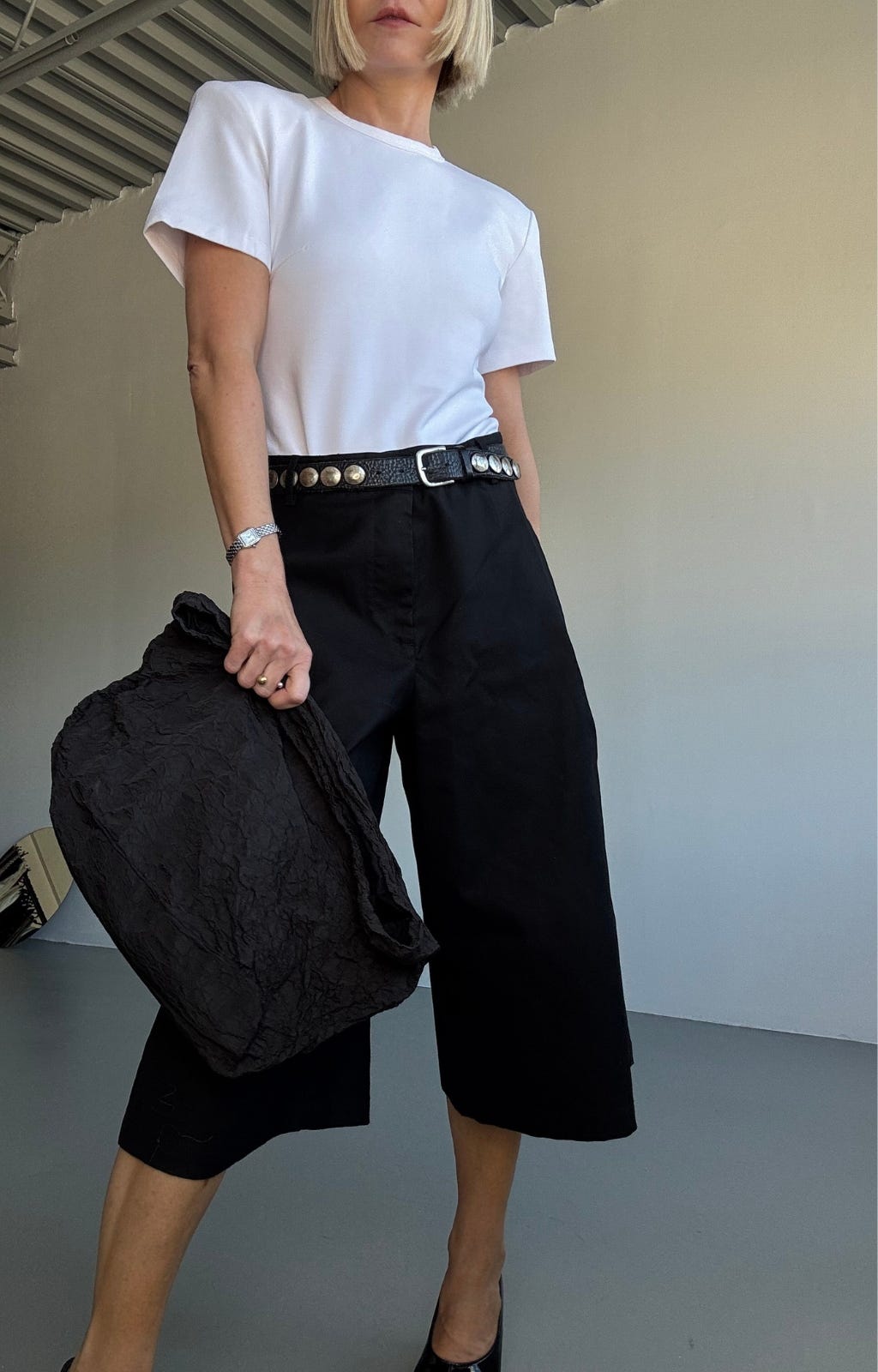
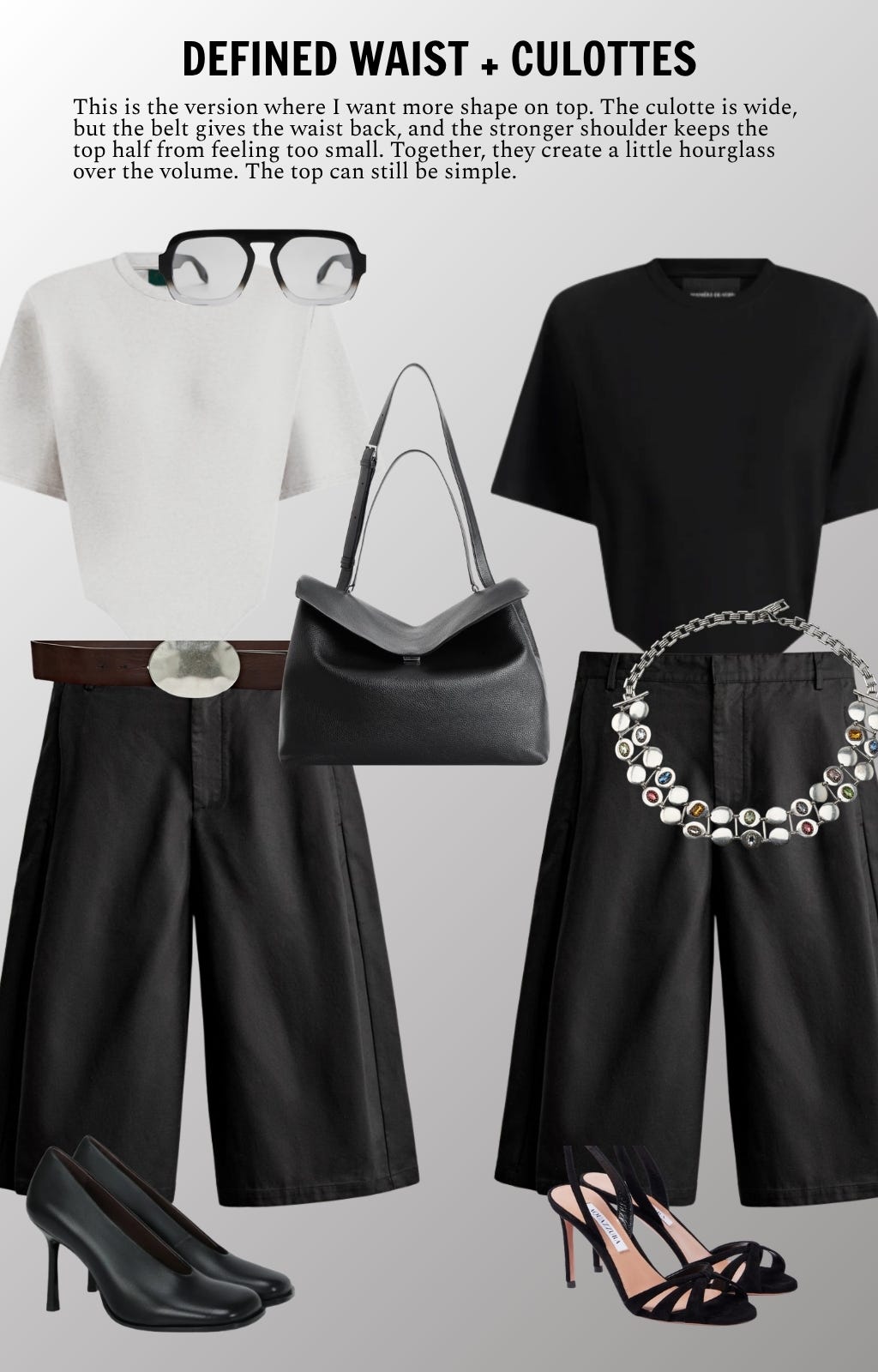
Culottes and long shorts are their own category. I love them for transitional weather because they give you coverage without fully committing to fall, but the proportion is specific. When the leg is wide and hits around the knee or lower, I almost always want a heel. Not for dressiness. For length. A flat can work, but for me it has to be very sharp, otherwise the whole thing starts to feel too practical in the wrong way.
That is why it is never just “add a shoe.”
It is the hem and the shoe together: where the pant ends, how much foot you see, whether the shoe has weight, shine, sharpness, height, softness. That relationship is often what makes the outfit feel current, or slightly off.
Sometimes a flat is exactly right. Sometimes the whole thing needs a heel. And sometimes the heel is not about dressing up. It is about fixing the proportion.
The formula evolves with you
This is why I don’t think formulas are limiting.
A formula can stay with you, but it does not have to stay the same.
You shift the proportion. You change the layer. You add a scarf, a belt, a different shoe. You bring in texture. Keep the formula, change the read.
That is usually how personal style evolves anyway. Not by replacing everything, but by noticing the combinations you keep coming back to and making them better.
Some women will always feel best in straight jeans. Some will love barrel shapes. Some never liked them and never needed to. That is fine. The goal is not to force a silhouette because it is current. The goal is to understand what each silhouette does, then decide what belongs in your life.
Classic pieces stay classic, but the way they are cut, worn, and combined changes.
That is where the styling is.
The Fall Stylebook is now live. Annual paid subscribers and founding members already received it as part of their subscription. It’s 37+ pant formulas for fall, built around silhouettes, shoes, layers, and the pieces that make them work.
Talk soon,
